
“L’Onde Septimus” part 2.
- Unfortunately, the whole “L’Onde Septimus” arc is not very convincing, and I don’t think the Marque Jaune idea should have been continued.
- The Moloch ends in a fairly anticlimactic way. There are many characters, and the focus on “language” as the tool the powerful Moloch needs but cannot fully muster is not convincing.
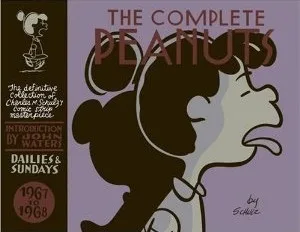
- Franklin appears.
- A lot of Snoopy in this album, of course.
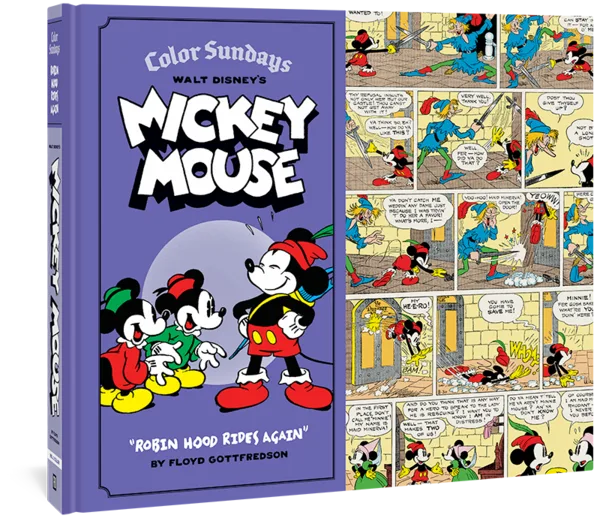
- I had acquired the entire series of volumes of Walt Disney’s Mickey Mouse, featuring the works of Floyd Gottfredson, years ago. This consists of 12 volumes in black and white, and 2 volumes of the “Color Sundays”. For some reason, the second volume of the Color Sundays was out of print and was missing. Recently, I found that it was available, so bought it to complete the collection.
- This contains some retelling of classic stories, as well as gags. I am usually not a great fan of the latter, compared with classic Mickey Mouse stories, but some are pretty good!
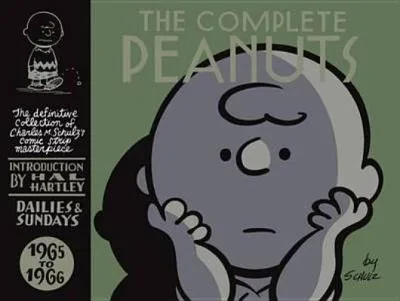
- a lot of Red Baron episodes
- Peppermint Patty appears in 1966; she tries to save Charlie Brown’s baseball team, but then considers it impossible and gives up; she considers Snoopy the best player
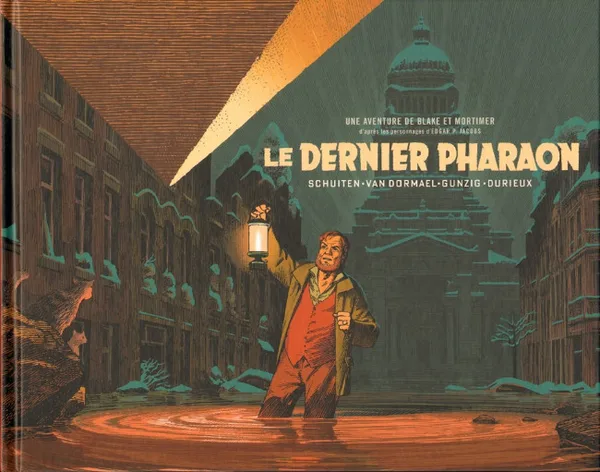
- First reread of this 2019 story.
- This is a very long story (around 170 pages in the large, horizontal format that I have, but 85 pages in the regular format), with incredibly beautiful art by Schuiten.
- The art is particularly showcased in the large format, and the colors by Laurent Durieux appear beautiful here.
- It is, of course, only lightly related to the Blake et Mortimer universe. This ties in to the Mystère de la Grande Pyramide, but in spirit, it is more of a Schuiten and Peeters Cités Obscures story.
- As found in a review, the scenario contains “d’ésotérisme, de politique, de terrorisme, d’environnement, de science-fiction, de fantastique, de monstres préhistoriques, de thérapies « nouvelâgeuses » et de complots millénaristes, sans oublier les nombreuses séquences oniriques qui ponctuent l’ensemble”. So yes, it is a little confused.
- I do not agree with the implied premise that technology is inherently bad, and that it would be a good thing to turn it off. Neither would Mortimer, I think.
- It is also a little weird that Blake and Mortimer, while they work together for the same purpose, are presented as having drifted apart over time. Why would these two heroes fall, or become unappreciated by the world at large?
- I wish the scenario was a little better, but it fits ok in the Schuiten and Peeters universe. The art being amazing makes up for it in great part.
Plot notes & spoilers
The premise is fantastic, if not phantasmagoric: a sort of secret society, initiated by the ancient Egyptians, who built a system of pyramids, including an inverted one below the ground of the Brussels Palace of Justice, which are necessary for a technological civilization. This massive system can be turned off by a mechanism at the top of the palace, only by the “Last Pharaoh” who turns out to be Pr. Mortimer. He does manage to do so, eventually, and the world is saved but also loses advanced technology.
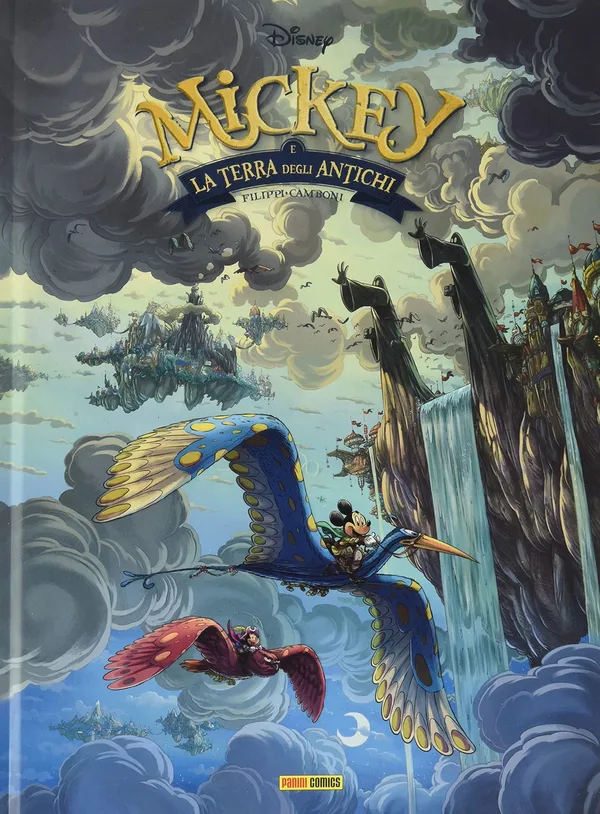
- This is a beautifully made Mickey story. The art, in particular, is excellent.
- The authors revive classic characters from the Floyd Gottfredson era, including Phantom Blot, Pete, and the three monkeys Ecks, Doublex, and Triplex, who are all the main villains of the story.
- Minnie is shown as driven and courageous, and she is not just a damsel in distress.
- This universe has potential, and I am hoping for a follow-up story.
- When I bought the Italian edition, I thought that it was the original one. But the original appears to be the French edition, which, it seems, has better printing quality.
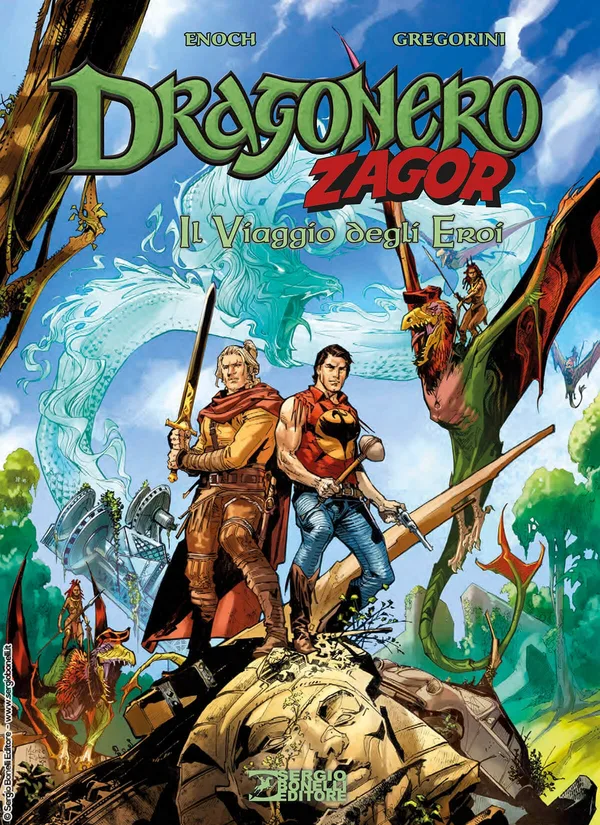
- This is the second story with the character of Zagor, after “Avventura a Darkwood”, and again involves universes crossing. This time, it is Zagor and Cico who go to Dragonero’s universe.
- The premise is that these universes are truly going to collide and that a great catastrophe will happen if the heroes don’t fix it.
- The trope of the “Amazons” is there again.
- I still know little about the character of Zagor, being only familiar with it thanks to these two crossover stories.
- Zagor was created by Sergio Bonelli in 1961. The book and the other Dragonero books in this series are published by the publishing company bearing his name.
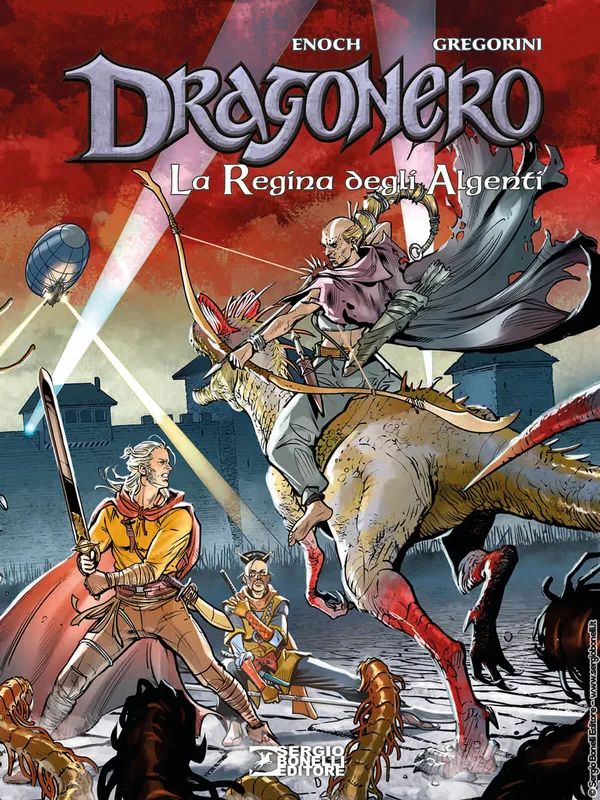
- I am not a huge fan of things like sand worms and blood, and there is a lot of that in this story.
- I like the Farghs, sorts of gigantic mammoth-like creatures.
- The whole story is colored largely gray and red, which gives it an unusual feel.
- The “Algenti”, scary mostly brainless creatures, remind me of the “White Walkers” from Game of Thrones. Of course, the whole idea of having weird, dangerous stuff beyond a wall is similar to Game of Thrones.
- The character of Ecuba, who turns out to be the queen of the Algenti, is fairly one-dimensional, and is reduced to absolute hatred for those she thinks have abandoned her, even though they haven’t. She is irrational, but that’s a trait of many villains. She has lost her humanity and does not wish to recover it.
- It’s not my favorite of the hardcover Dragonero stories, but it is ok.
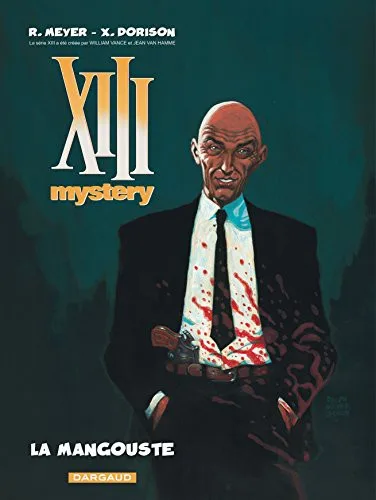
The topic of the killer is not my favorite, but this story tries to give a soul, kind of, to the character of La Mangouste. Inhumanity breeds inhumanity.
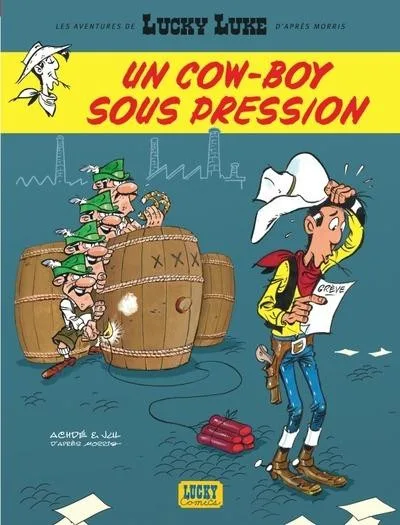
- A story in the context of the German-American community, in particular the beer industry in Wisconsin.
- Good story overall, with some good humor. By most accounts, this is the best of the Jul/Achdé era, and one of the best of the post-Morris era.
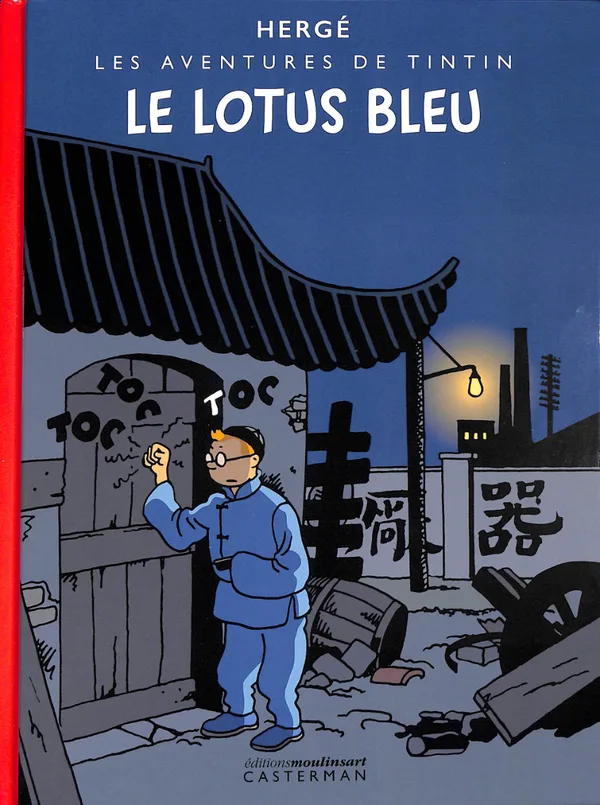
- This is the 2025 colorized version of the 1936 black and white original.
- Of course, in general, Le Lotus Bleu is considered an excellent story. Hergé’s real-life friend, Tchang Tchong-jen, helped him with the Chinese culture and Chinese characters in the book, thereby giving the China of the 1930s a more authentic feel, mostly free of the prejudices common in the West at the time.
- Tintin is here a young hero, of course, but also very sensitive to the plight of the oppressed.
- Tintin’s new friendship with Tchang is very touching.
- The Dupondt are, as is fit, made fun of. They want to be Tintin’s friend, but still follow their orders, even though they regret it in the end.
- The story is full of action: abductions, poisonings, madness, conspiracies, corruption. But also kindness, loyalty, friendship, and just plain unbelievable luck.
- But we also see a rich but dark political background, which matches the times, and has clear echoes in the 2020s.
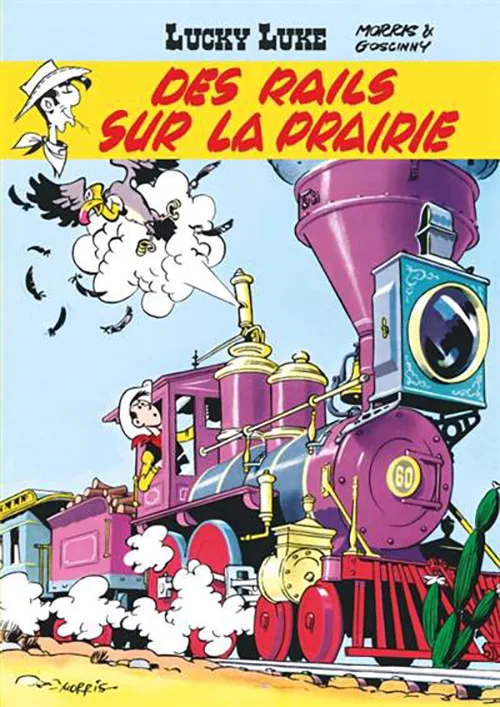
- I first read this story in the 1970s.
- It is the first that Goscinny wrote for Morris. Goscinny went on to write many stories, of course.
- This is a fun story, but very light compared to later ones.
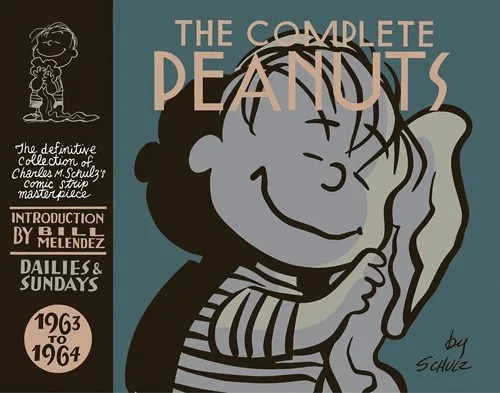
appearance of “5”
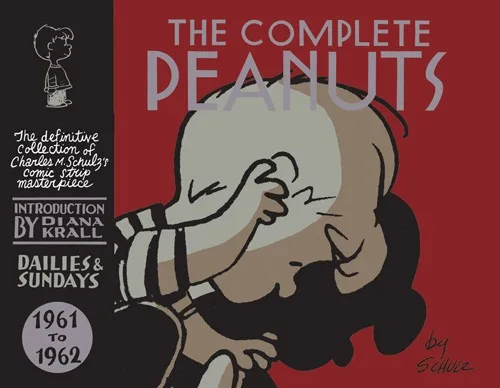
- appearance of Frieda
- Sally grows up
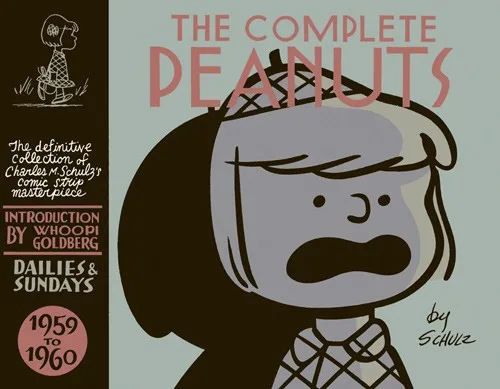
- Snoopy is very close to the Snoopy we know and like.
- Charlie Brown’s younger sister, Sally, makes her first appearance.
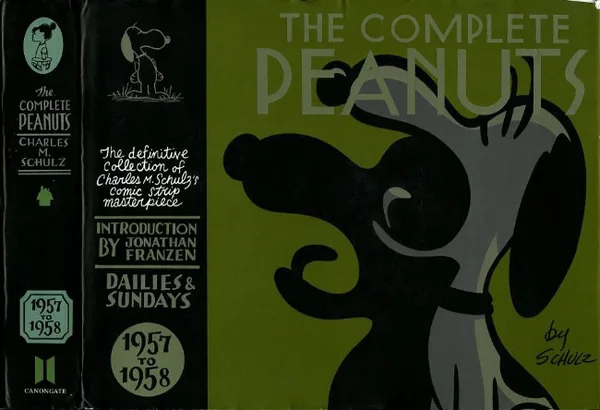
- Snoopy continues his evolution. He occasionally walks on two legs, continues his imitations, like the vulture, and in the end even sleeps, clumsily, on the top of his doghouse.
- Charlie Brown, Lucy, Linus, Schroeder, and Pig-Pen are all present. Violet and Shermy make rare appearances.
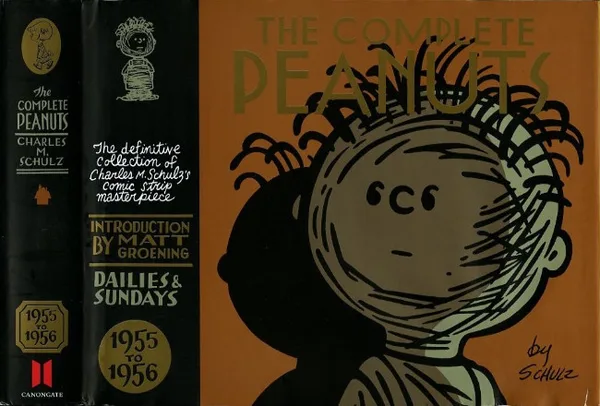
- Lucy, Linus, Schroeder, Snoopy, Pig-Pen, and of course Charlie Brown are all present. Shermy, Patty, and especially Violet still appear but less.
- Charlotte Braun rapidly disappears.
- Snoopy is more and more like the Snoopy we know.
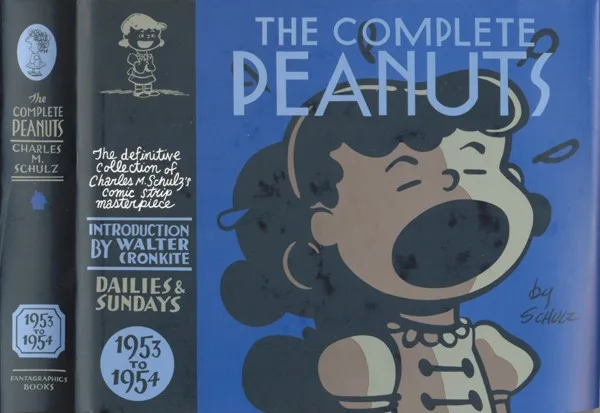
- “Pig-Pen” makes his first appearance in this volume.
- Charlotte Braun also appears. I believe that she is a temporary character.
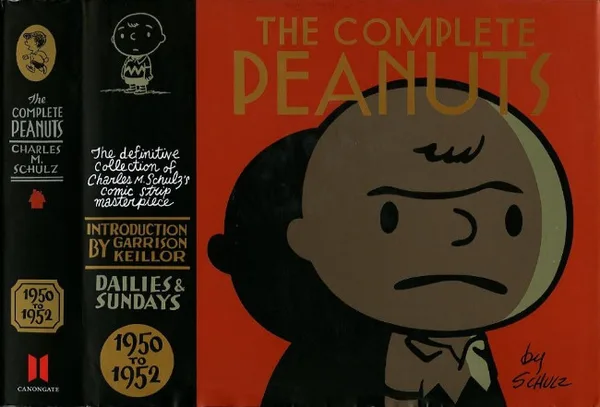
- The first 2 years of Peanuts, with the first appearances of Charlie Brown, Snoopy, Lucy, Linus (Lucy’s little brother), Schroeder (already a Beethoven fan), but also Violet, Patty, and Shermy.
- Snoopy doesn’t speak yet, and looks very different, walking on all fours, and mostly being a dog.
- Book also has a commentary and a long Schulz interview from 1987.
- I learned that Schulz was always called Sparky.
- Schulz never liked, in fact hated, the name “Peanuts” given to the strip by the syndicate.
- Schulz only wanted kids (and animals) in his strip. It’s very rare that there is an adult.
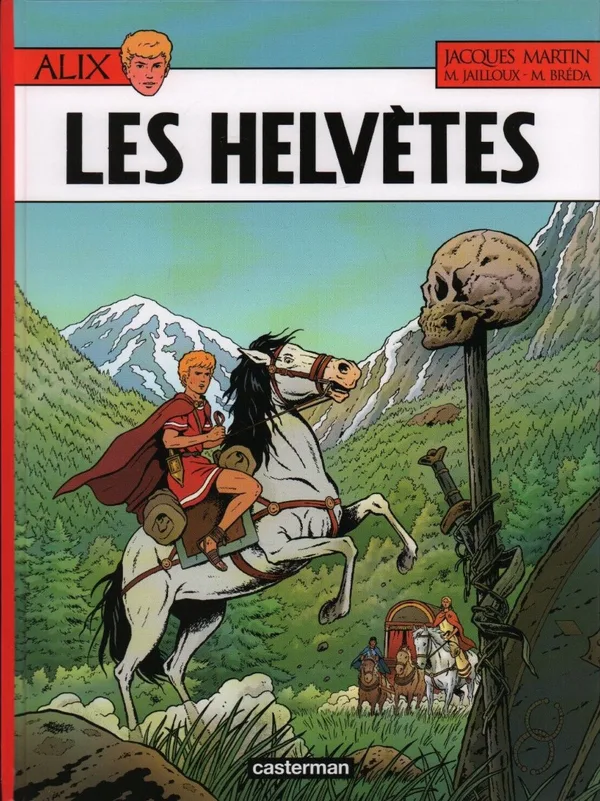
- This is one of the best Alix stories post-Martin. The intro says it’s “freely inspired by a synopsis by Jacques Martin”, and that might be part of the reason why it is so good.
- But the art by Jailloux is really excellent as well.
- I have a bias since the story largely takes place on modern Switzerland territory, and there is an appeal to see the beautiful Alps, lakes, and a largely untouched nature.
- The sacrifice of Balios is tough, but we were forewarned early in the story that the great horse would not make it.
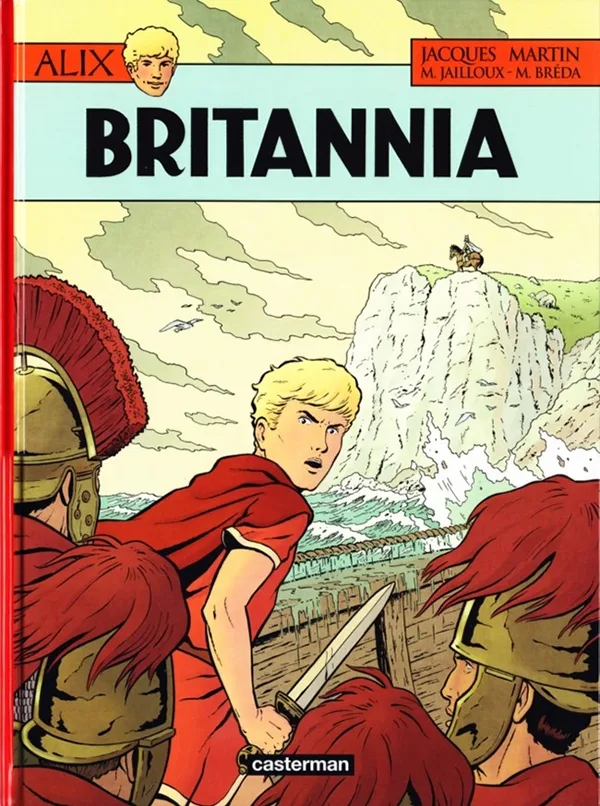
- The art of Marc Jailloux is excellent.
- The story is relatively complex. There is Caesar, going to Britain as he was promised riches by Viridoros, the villain of the story who ends up being a traitor. There is Mancios, a prince of Britain, who helps Caesar, hoping to retake his position held by an usurper, Cassinos. The druids, including a female druid, are also involved. Caesar and his troops narrowly escape following the treason of Viridoros. It turns out that there wouldn’t be many riches to obtain anyway and Caesar leaves Britain, with a promise of never coming back. Alix and Enak play their usual hero roles, siding as well as they can with the good guys, and expressing skepticism towards Caesar’s adventure.
Luc Orient - Le mur #
- 11 pages, with 6 completed and 5 of Greg’s scenario only. Unfinished.
- Paape wasn’t enthused with how the scenario was going, and it was not pursued.
- The incomplete art is great.
- I wish there had been a few solid “Terango zenith” stories. The characters would have allowed for that. It’s just that Greg had a false start here, and then it was too late. This and the flawed Caragal give us a taste of what it could have been.
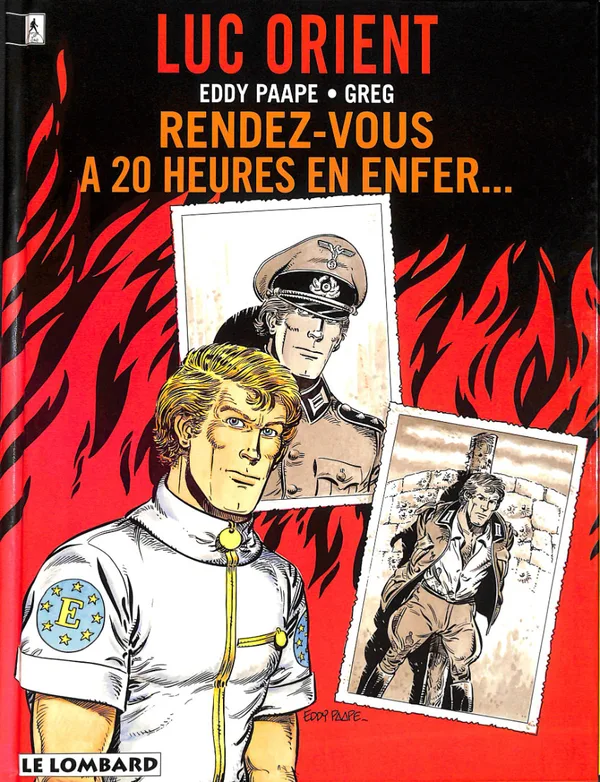
- Published in 1994 but created “10 years earlier”.
- The lab is now called “Eurocristal IV”. We don’t know what happened to II and III. But Kala, Luc, and Lora all seem to work at IV now.
- The art is great, and story excellent.
- There are common time travel ideas present, and the question of free will is raised.
- I find the panel where Luc comes out of the water on the pod a little weird.
- The context is that of the end of WWII, when Germany was falling, so it also has very heavy implications.
- The humorous punch line of the story is nicely found.
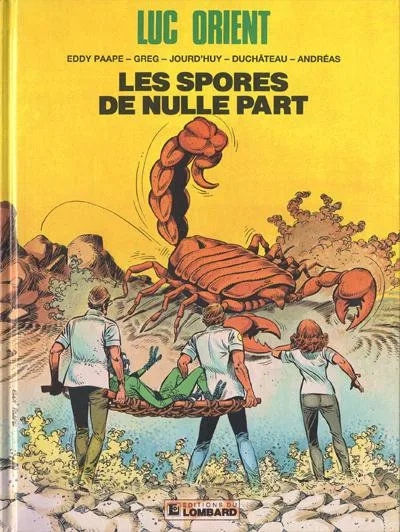
- Contains 4 stories
- Les spores de nulle part: This is a nice short story.
- Les rayons de feu du soleil: This story is a little weaker and not my favorite. I do like the part at Eurocristal I, where you see the day to day of Luc, Lora, and Kala, who gets teased a little.
- La vengeance: This is a good story, again starting at Eurocristal I.
- Mission en 2012: This is not Luc Orient, but it is a really good short story of time travel.
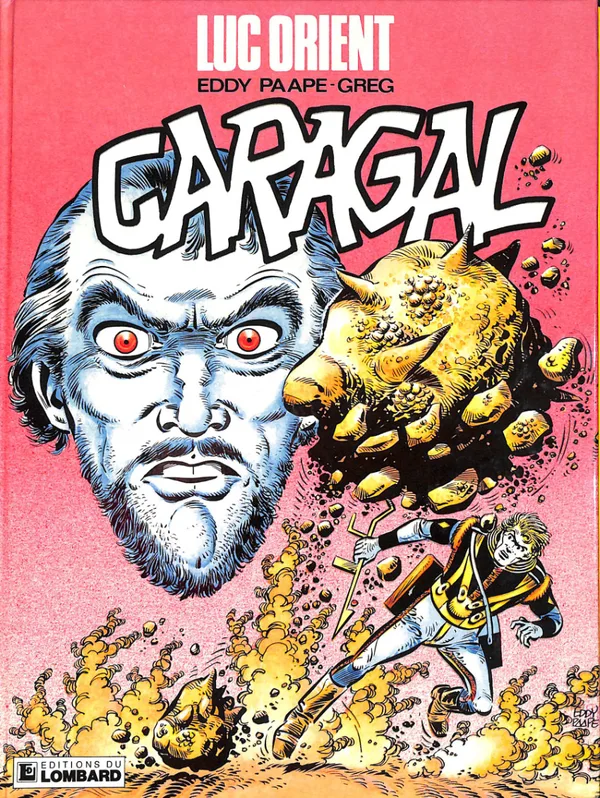
- I confirm that I don’t like this story. There are positive aspects, however:
- The action takes place on Terango with Teranguian characters. This tells us that more such stories could have been written.
- I love the colors in this story. They are better than in most albums.
- The art is excellent and detailed, superior to many of the earlier albums.
- I wonder how this story was written, or certainly published, after the Dartz cycle.
- I’d say that the Terango stories would have deserved a better scenario.
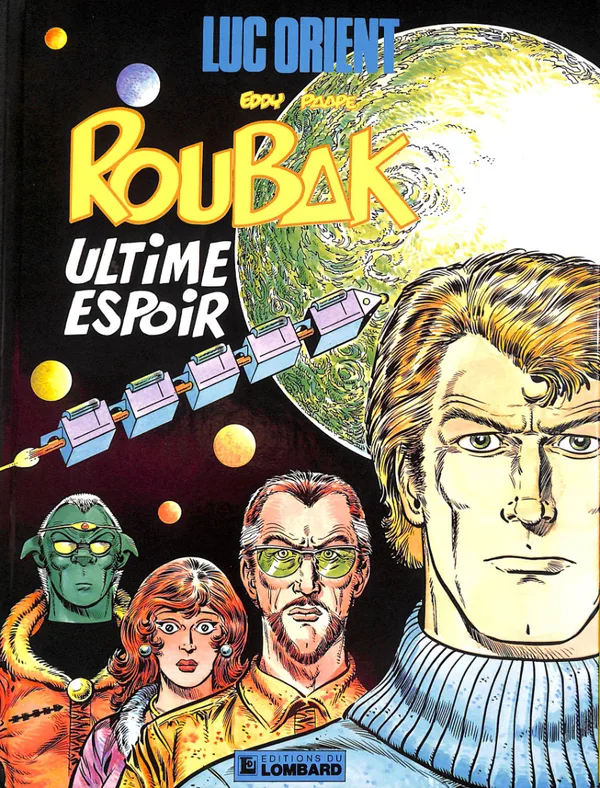
End of the Dartz cycle. Everything is reset, as in a dream.
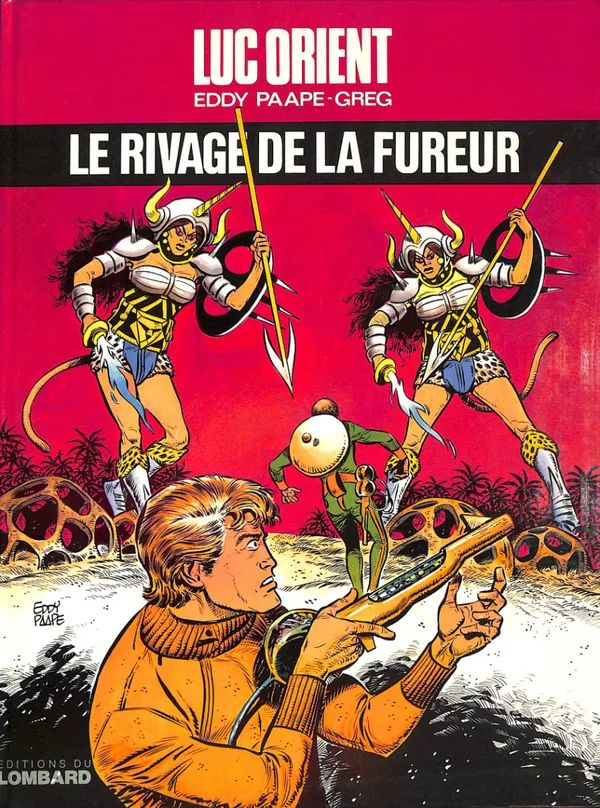
- The Amazons are certainly a trope, but the authors give women an improved role in this story. Lora rises to the occasion.
- One wishes to have seen the Teranguians again.
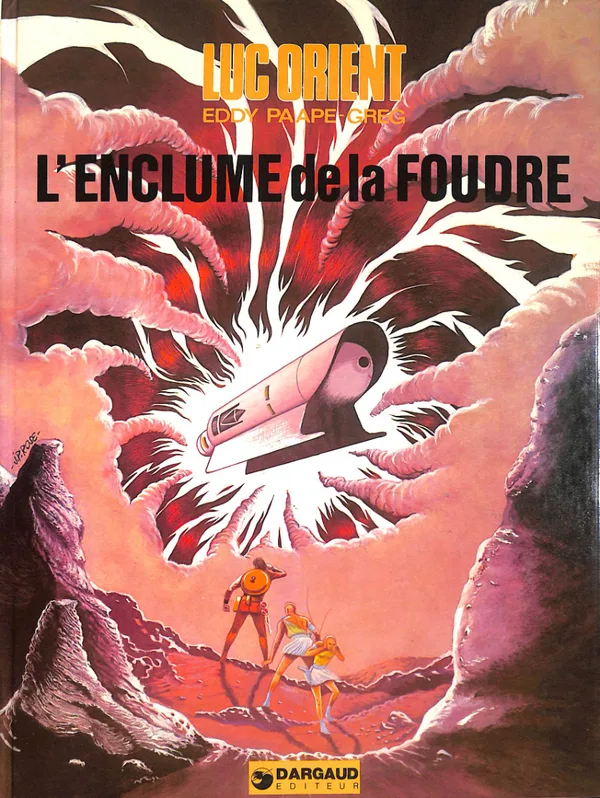
- Water that has a “different form” is, of course, not reasonable.
- Like “La planète de l’angoisse”, this album is pure adventure and doesn’t advance the main plot by much.
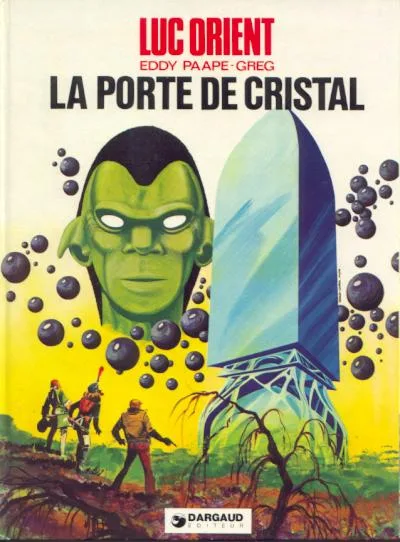
- We start the Dartz cycle.
- The SF is ok, but there is a lot of hand-wavy stuff.
- The way Orient handles the characters from the past is good.
- The Dartz, like the Teranguians, are very human-like, almost to a fault: same height, legs, arms, ears, etc. It is very much in the spirit of Star Trek from that point of view.
- The time difference aspect is the most fun, and the appearance of a new modern world where that forest was, with an old Kala, is well done. Clearly there was a spirit of “progress” at the time.
- Thinking about that, the technical decors were not Paape’s forte. Compare this with masters at such decors, like Roger Leloup. Paape, instead, is very minimalistic.
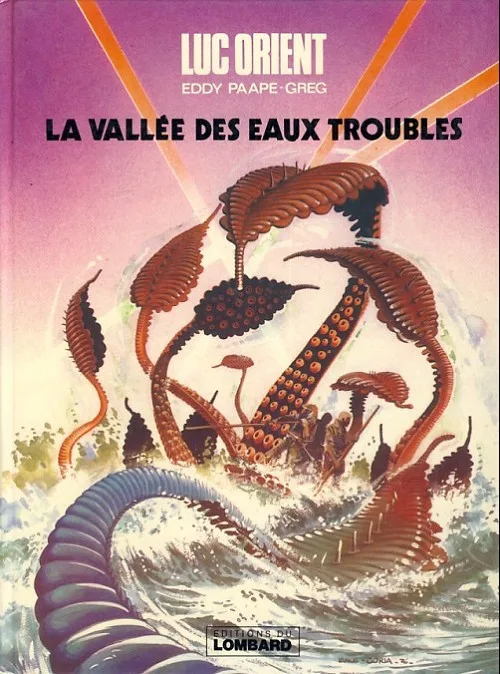
- Overall a pretty good story, although not my favorite topic.
- Kala and Lora are almost entirely absent.
- Orient’s last comment has a weird religious implication, unexpected from a scientist: “Yes, I wonder if someone else has not, more than Wolfgang Rafael, forbidden that the mystery of this ‘pirate’ creation should be repeated.” But I suppose that this is present for effect. It reminds me of the “Junior Mint” episode of Seinfeld, where the doctor says “I have no medical evidence to back me up but something happened during the operation that staved off that infection. Something beyond science. Something perhaps… from above.”.
- I like that the natives of the jungle are well depicted, and always respected by Orient and his teammates.
- I had taken notes earlier about the weird depiction of skiing, and that remains a little funny. This said, Kala and Toba are supposed to be decent skiers, and they are shown with a good, advanced posture, especially for the time (1970s). Orient is supposed to be a poor skier, and mostly sticks to that, but there are a couple of exceptions where he is shown with a posture too good for his level, especially considered that this is off-piste skiing. Still, all skiers go downhill all the time, and that is not how skiing on that kind of terrain works. Toba even says “Only another half hour of effort”, shown in a cross-country skiing posture, which might indicate they are not skiing downhill at that point, but that contradicts the previous frame where Orient is struggling to go downhill. I suspect that Paape was not a skier.
- I like the depiction of the ski resort, which seems inspired by Zermatt.
- The “human anthill” idea is not bad, although you would think that getting all that is needed for such a society would make it difficult to keep it secret over 1500 years. I still find the final destruction of the underground city a bit odd.
- The story is fine on its face, but the focus on blood seems a bit odd.
- The motivations of Okjorr are unclear. They are supposed to be a smarter race, but he shows all the worst traits of humans. Also, although they can live 10,000 years, he doesn’t seem bothered by committing suicide in the end.
- Okjorr regains his original appearance in death. Orient seems disgusted by his monstrous aspect, but he is not that different from humans. However, I like that Paape doesn’t fully show the appearance of the Trementhawans, but instead shows hints of that appearance.
- Overall, this is not my favorite Luc Orient story.
Plot notes & spoilers
The world is at the mercy of a single extraterrestrial (Okjorr, from Trementhawah, who doesn’t reveal his nature to Earth) able to destroy materials and life on Earth. He first shows off his power of destruction on a bridge, to convince world leaders to convene, which they do, but for what purpose we don’t really know. World leaders decide not to negotiate with the “destroyer”, whatever he wants. Orient is contacted by another ET, Rojkorr, who wants to counter Okjorr. He reveals to Orient the original plan of his species: submit Earth, and convert all forms of life by removing their blood, but in exchange making them “better”. Okjorr seems more aggressive, and on a path to, instead, submit or even eliminate all life on Earth. So Rojkorr decides to betray his species, and help Orient. In a second show of power, Okjorr destroys the Statue of Liberty, but the damage is contained thanks to blood plasma. This is the parade, which stops Okjorr in his plans. Rojkorr sets up an encounter between Orient and Okjorr. The latter says he has decided to burn the Earth’s atmosphere instead, in a last vindictive act. Orient and Rojkorr manage to stop and destroy him. Rojkorr becomes human, although without blood.
I note the “superhuman” effort of Orient throwing Kala up the elevator shaft. Wouldn’t it have been easier to throw Lora? The “play boy” scientist turns out not to be that bad after all.
A good story, as I had noted during previous reads, with its similarity to the Mystère Borg.
Nice atmosphere in the cabin around the lake, with the mafia bosses.
The arrival on Terango of Argos, with the Thargs. A few things I notice:
- Granya goes through the control “arcs” which are supposed to destroy whoever goes through them. But her helpers didn’t ask her whether she was armed or not before going through.
- Granya is told not to look at the gaze from the landing ship, or she “would be killed instantly”. But the rest of the body is ok?
- As usual, the SF aspects are a little wonky. We are told that dynamite will behave differently on Terango. We know that the atmosphere of Terango is different, but are the laws of physics? Surely, with Sectan having an invasion fleet, the Teranguians know about explosives.
- The Thargs are somehow made immune to radioactivity, and then clad in radioactive material, making them human bombs. But of course, it’s not at all how nuclear bombs work. Then somehow it all goes away.
- In short, the science doesn’t hold well, and you just have to suspend disbelief.
This is a side-story in the Terango cycle: under the pretext of reaching other peoples on Terango, Luc, Lora, and their Teranguian friends deal with dragon-men and bird-men. In the end, not much has progressed in the larger arc. But there is a nice criticism of the oppression of a population by, in this case, two leaders, who even drug their population to keep it under control.
Maybe the best of the Terango arc, where we get to meet the dictator of Terango.
All stories except the first one are by V. Turier. On the other hand, cartoonists are varied. Some are well-known, like Alessandro Sisti and Giorgio Cavazzano. All in all, these are fairly run-of-the-mill stories.